
When you get a call saying your debit or credit card has been compromised, your first instinct is probably to do whatever it takes to protect your money. Scammers know that, and they're using it against you.
Many financial institutions, including Addition Financial, are seeing more scammers spoofing their phone numbers and impersonating their service representatives. One scam that's on the rise sounds helpful on the surface: a caller claims your card has been compromised and offers to have it "picked up" for secure disposal. All you have to do is cut it up and leave it on your doorstep.
Here's how the scam works and what you can do to protect yourself.
How the Scam Works
The scheme usually starts with a phone call that appears to come from Addition Financial or another trusted institution. Because scammers can spoof phone numbers, the caller ID may even show our name or number. The person on the line sounds professional and may already know a few details about you.
They'll tell you there's been suspicious activity and your card needs to be replaced right away. Then they'll give you instructions: cut the card into pieces and leave it outside, in your mailbox, or under your doormat, where a "courier" will collect it for safe disposal. Some scammers will also ask you to confirm your card number, PIN, or security code "for their records" before they hang up.
That doorstep is the whole scam.
Cutting up a card doesn't destroy the information on it. Even in pieces, the card number, expiration date, and security code (CVV) can often be read and put back together. Once the fraudster picks up those pieces, they have everything they need to make purchases with your card, often before you realize anything is wrong.
The One Rule That Stops This Scam Cold
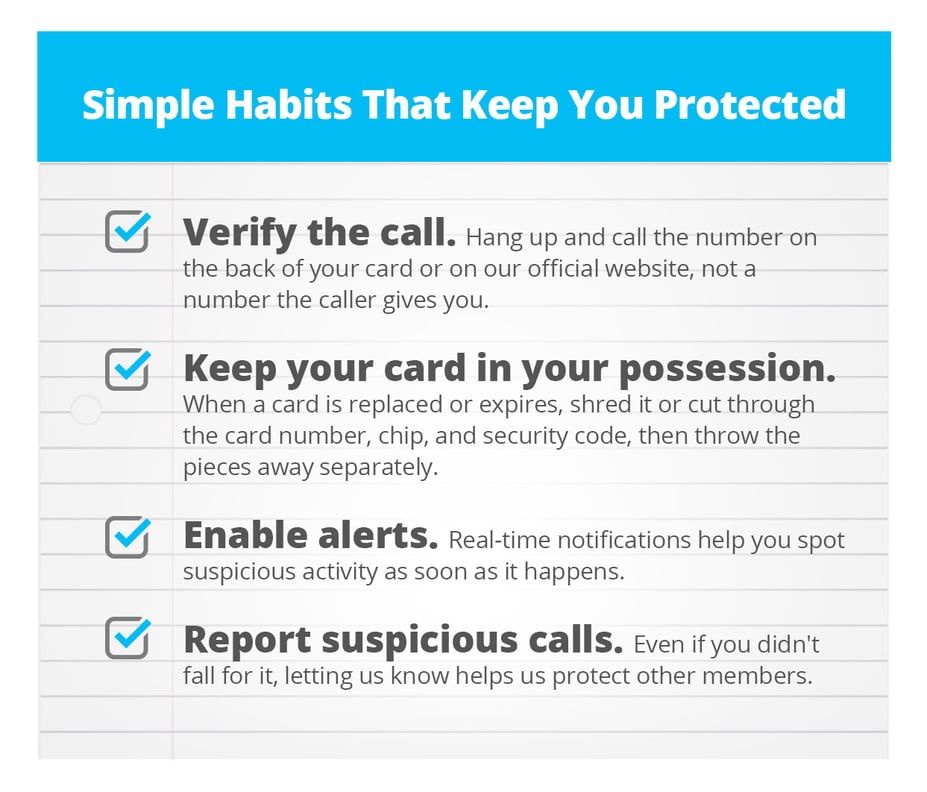
Never leave your card outside or hand it to anyone who asks for it, for any reason.
Addition Financial will never ask you to leave your card on your doorstep, send a courier to collect it, or give it to anyone. Neither will any other legitimate bank or credit union. If we believe your card has been compromised, we can take care of it on our end. If someone claiming to represent us asks for your card, it's a scam, full stop. Hang up and don't engage further.
Red Flags That Should Make You Hang Up Immediately
Scammers rely on urgency and confusion to get you to act before you think.
If someone contacts you and does any of the following, treat it as a scam in progress:
Asks you to leave your card somewhere or hand it over. There is no legitimate reason for anyone to collect your card from your home, whether it's whole or cut into pieces.
Asks for your full card number, PIN, or CVV. No legitimate employee will ask you to read these details over the phone.
Pressures you to act right now. Scammers create urgency so you'll follow their instructions before you have time to question them.
Relies on caller ID to prove who they are. Because numbers can be spoofed, seeing our name on your screen doesn't guarantee it's really us.
If you notice any of these during a call, the safest move is to hang up. You can always call us back using the number on the back of your card to confirm whether anything is actually wrong.
What to Do If Something Feels Off
Even careful members can be targeted. If you've already left your card out, shared your card details, or noticed transactions you didn't make, contact Addition Financial right away. The sooner we know, the faster we can block your card, secure your account, and investigate any fraudulent charges.
An Important Reminder from Addition Financial
Addition Financial will never ask you to send money to resolve an issue, verify your account, or prevent fraud. If you receive a suspicious call, email, or text message from anyone claiming to represent Addition Financial, stop the interaction and contact us directly.
Protecting your card is simple, even when a scammer is doing their best to make it feel complicated: keep it in your hands, keep your details to yourself, and when in doubt, hang up and call us. We're here to help you bank with confidence, and that starts with making sure the person on the other end of the line is actually us.
Posted on Oct 21, 2026
Topics: