
If someone called and told you your money was in danger, you'd want to act fast to protect it. That instinct is exactly what a growing number of scammers are counting on.
Fraudsters are now impersonating representatives from financial institutions, fraud departments, and even law enforcement to convince people to withdraw cash and hand it over to a "courier." The story changes from call to call, but the ending is always the same: your money walks out the door with a stranger, and it's almost impossible to get back.
How the Scam Works
The scheme usually starts with an unexpected phone call. The caller may claim to be from Addition Financial, another bank's fraud department, or a government or police agency. Because scammers can spoof phone numbers, the caller ID may even look legitimate.
They'll tell you there's a problem with your account, or that you're part of an internal investigation. Maybe an employee is suspected of stealing from members, or your funds have been flagged as counterfeit. To "protect" your money or "help" with the investigation, they instruct you to withdraw cash. Then they tell you someone will come to your home, or meet you at another location, to collect it for safekeeping.
Along the way, they'll often insist that you keep the situation secret. They may say you can't tell your family, or even the employees at your branch, because doing so could "compromise the investigation."
That secrecy is the whole scam.
Scammers know that the moment you talk to someone you trust, their story falls apart. By keeping you isolated and rushed, they make sure no one has the chance to point out that no legitimate investigation works this way. Once you hand over the cash, it's gone.
The One Rule That Stops This Scam Cold
Never hand cash to a courier, for any reason.
No legitimate bank, credit union, or law enforcement investigation will ever require you to surrender cash to a stranger. 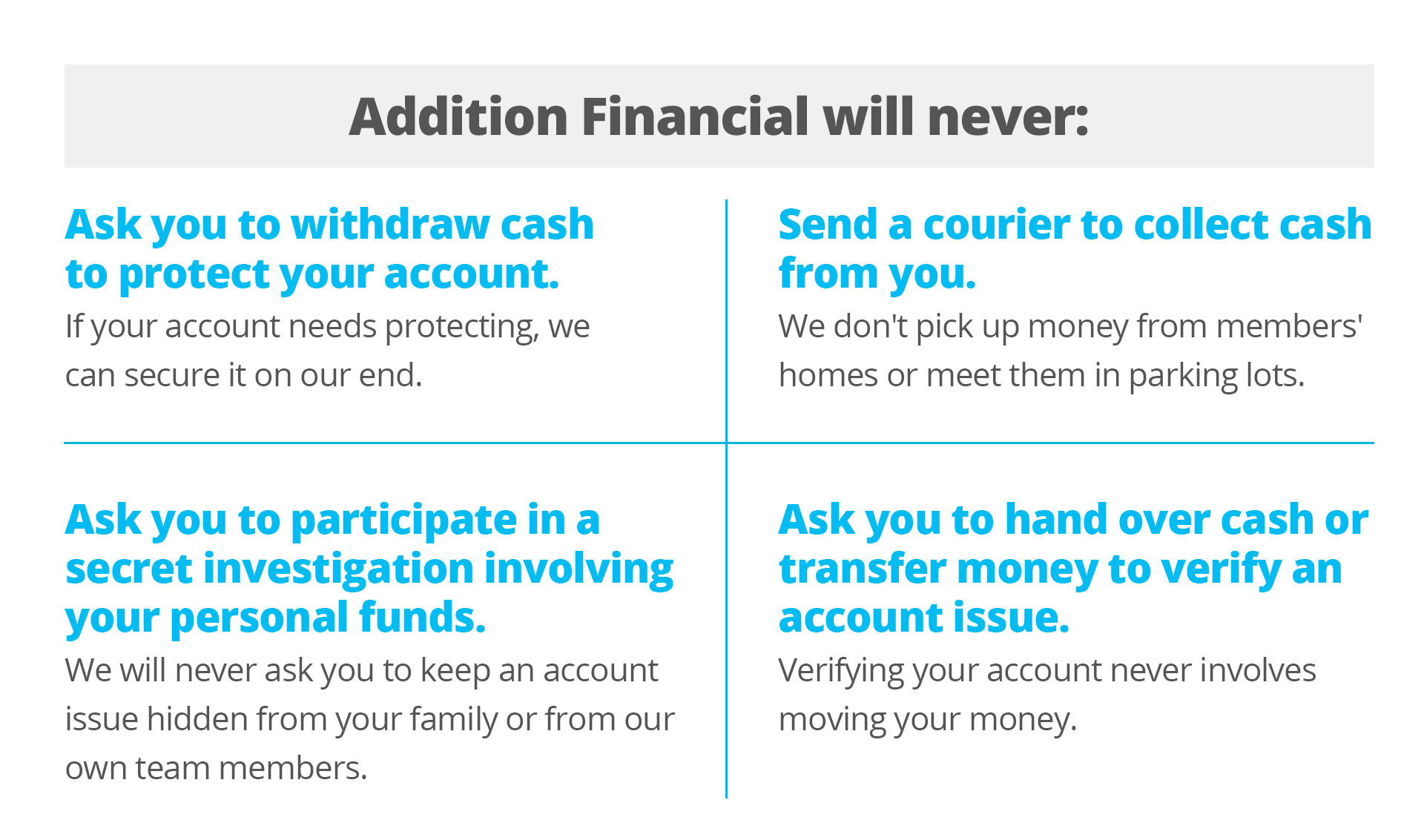
If someone claiming to represent us asks you to do any of these things, it's a scam, full stop. Hang up and don't engage further.
Red Flags That Should Make You Hang Up Immediately
Scammers rely on urgency, fear, and isolation to get you to act before you think. Treat the call as a scam in progress if the caller:
Tells you to keep it a secret. Real investigators don't ask you to hide things from the people closest to you.
Pushes you to act right now. Pressure to withdraw money immediately is designed to keep you from double-checking.
Coaches you on what to say at the branch. If a caller tells you to give tellers a cover story for a large withdrawal, that's a major warning sign.
Offers to send someone to collect your money. This alone is enough to know it's a scam.
If You Think You've Been Targeted
Even careful members can be targeted, and scammers are very good at what they do. If you believe you've been approached by or fallen victim to this scheme, contact Addition Financial immediately and report the incident to your local law enforcement. You can also file a complaint with the Federal Trade Commission at ReportFraud.ftc.gov. Reporting helps protect not only you, but other members who may be targeted next.
An Important Reminder from Addition Financial
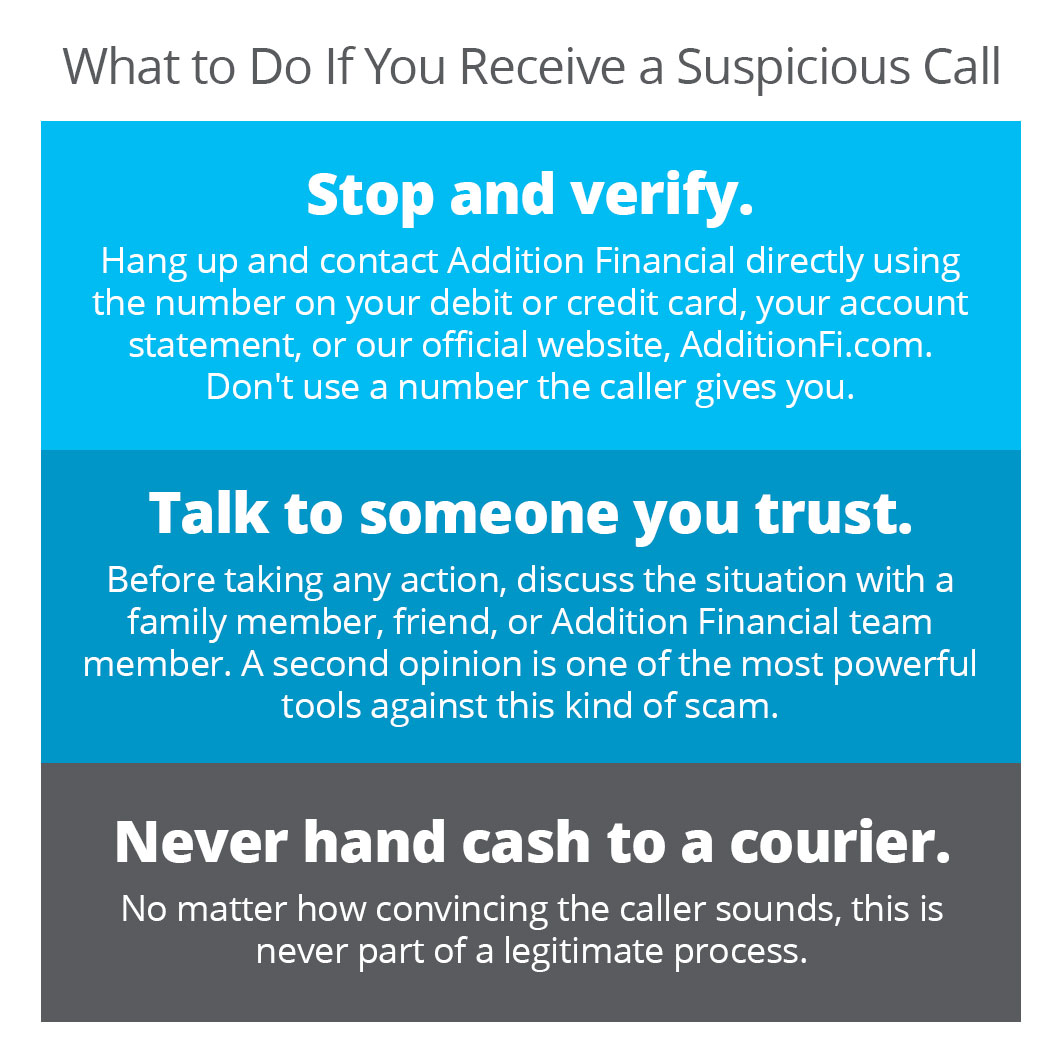
Addition Financial will never ask you to send money to resolve an issue, verify your account, or prevent fraud. If you receive a suspicious call, email, or text message from anyone claiming to represent Addition Financial, stop the interaction and contact us directly.
The rule is simple, even when a scammer tries to make it feel complicated: if someone tells you to withdraw cash and give it to a courier, it's a scam. Stop, verify, and report it. We're here to help you bank with confidence, and that starts with making sure the person on the other end of the line is actually us.
Posted on Oct 19, 2026
Topics: